Presenting
Send the proposal with the first reply
· 4 min read
In short
Enquiries go cold within hours, a short list of options is easier to choose from than a long one. People also want what they can picture themselves doing. A first reply with two or three yachts side by side and a sample week answers all three. CharterRoutes builds that reply in minutes.
Researchers once sent a web enquiry to 2,241 US companies and timed the replies. Only 37% answered within an hour; 23% never answered at all. In a second set of 1.25 million leads, companies that tried to reach a lead within the hour were nearly 7 times as likely to get a real conversation going as those that tried an hour later. Against companies that waited a day or more, the gap was over 60 times.
Charter enquiries were never part of those studies. The logic carries over all the same. A client who has written to three brokers reads the first good answer first. Every hour after that, the week matters a little less to them than it did when they hit send.
Questions first, or the proposal first
The usual first reply is quick and empty: thanks for getting in touch, how many guests, which dates, what budget, a proposal will follow. It's polite. It also hands the client homework before they've seen anything worth the effort.
The stronger first reply asks the same questions underneath two or three real yachts and a sample week. The client answers while looking at boats they could actually book and a week they could actually have. "The catamaran, but can we add a night on Hydra?" is a far easier reply to write than a list of numbers. It's also a far better start to a booking.
Two or three yachts are enough
In a well-known field study, a tasting stand in a delicatessen offered either 24 jams or 6. The big display drew more people in. The small one sold: about 30% of those who saw 6 jams bought one, against about 3% of those who saw 24.
Later studies found that the effect doesn't always appear. One condition that reliably brought it back was having to justify the choice afterwards. A charter client choosing a week for family or friends has to do exactly that, at a price where a wrong pick hurts. Two or three yachts, each with one line on why it fits, give them a choice they can defend to the group.
The week does the selling
Consumer research keeps returning to the same finding: people want what they can picture themselves using. In one set of experiments, simply turning a product in an ad so that viewers could imagine picking it up raised their intention to buy. For pleasures such as a holiday, picturing the experience as it unfolds works best when people are in an emotional frame of mind.
A yacht brochure shows the boat. A sample week shows the holiday: the morning swim at anchor, lunch ashore in Hydra harbour, the short hop to the next bay. That's what the client forwards to the group chat. It's also the page that turns "a yacht charter in Greece" into their week.
How CharterRoutes builds it
Type the brief as the client wrote it and the week is drafted day by day, with every leg routed around land and its hours at the yacht's speed. Add the yachts from an e-brochure link, a PDF or screenshots: most links are read in 15 to 25 seconds, a file in under 10. Every price is marked for you to confirm before anything goes out.
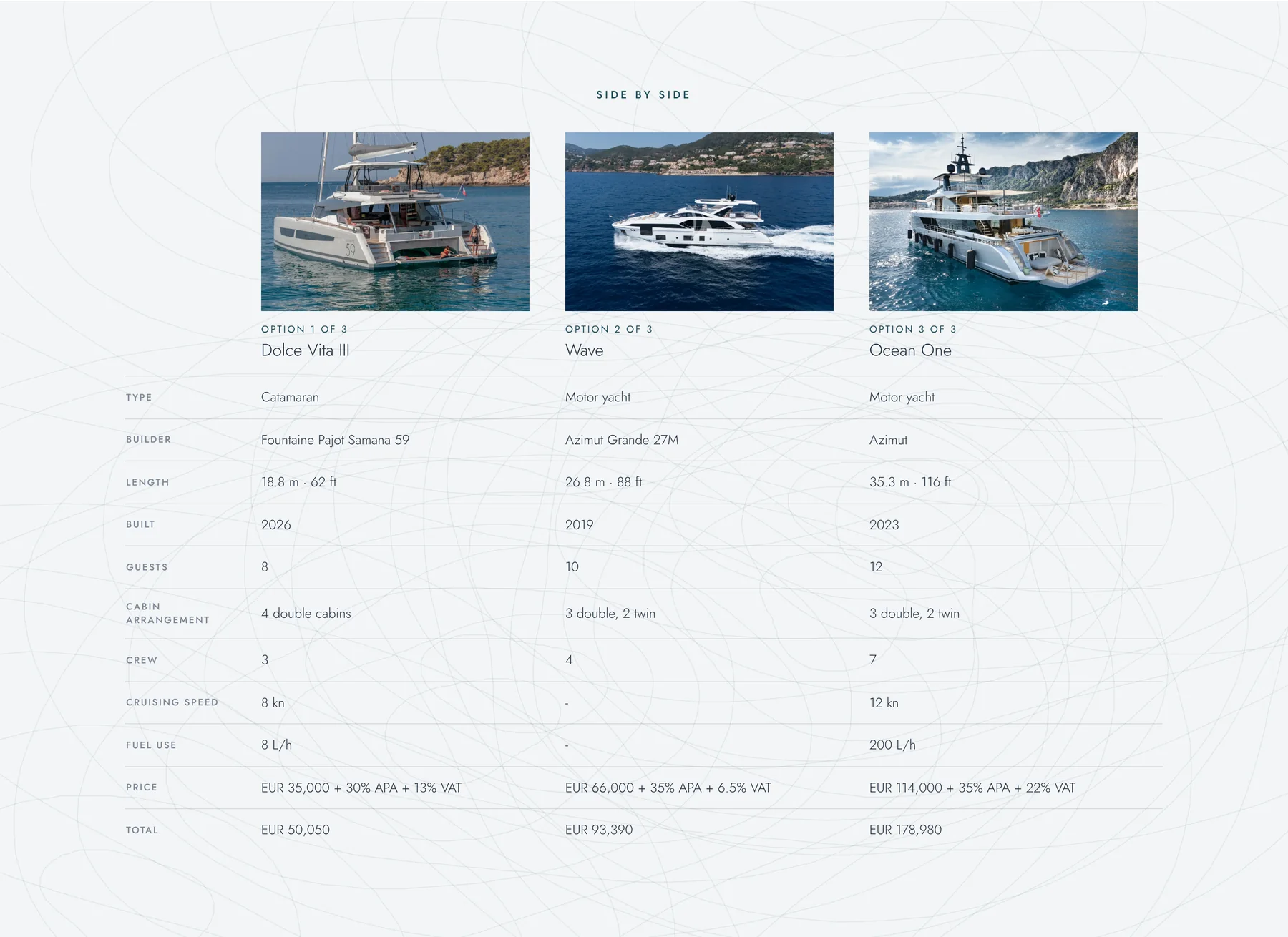
From two yachts up, the offer gets a side-by-side page. With the week attached, each yacht shows its own time under way and fuel for that route. The client opens one link on their phone (the yachts, the comparison, then the week), or you send the same thing as a PDF under your own brand.
Questions
How fast should a broker reply to a charter enquiry?
As fast as a useful answer allows. Research on web enquiries in general found that companies trying to reach a lead within an hour were nearly 7 times as likely to get a real conversation as those trying an hour later. A first reply that already holds the yachts and a sample week is both fast and worth reading.
How many yachts should a first proposal show?
Two or three, each with a line on why it fits. Choice research suggests a short list is easier to decide from, above all when the person has to justify the choice to others, as a client choosing for a group does.
What does the client receive from CharterRoutes?
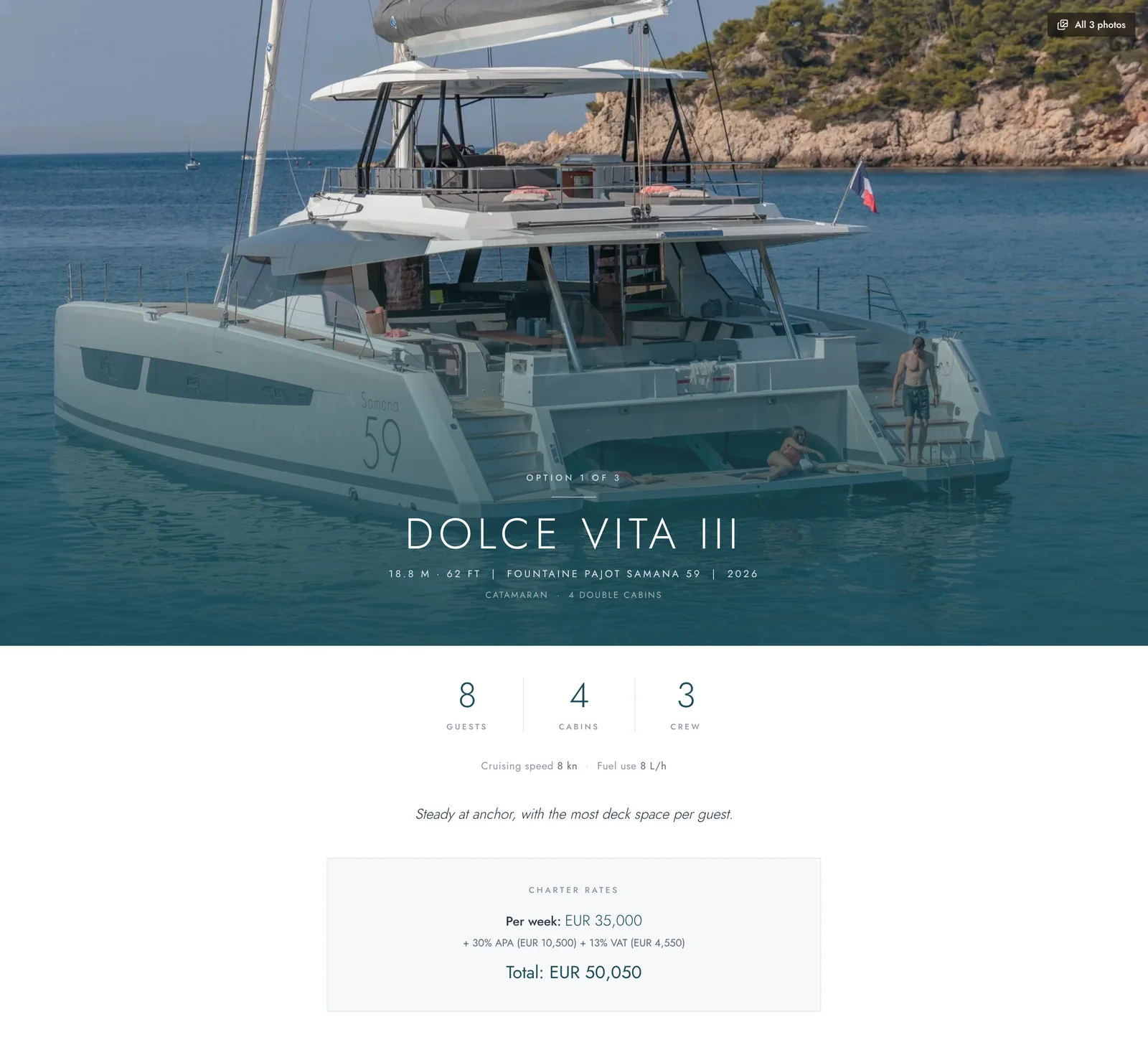
One link that opens on any phone, or a PDF: each yacht with photos, figures, highlights and your price, a side-by-side page from two yachts up, then the sample week day by day. Your logo, colour and contact details are on all of it.
Sources: published studies on lead response times (2007 and 2011), choice overload (2000 and later replications) and mental imagery in advertising (2004 to 2012).
Itineraries, offers and preference sheets in one place
Plan the week on a map or from one sentence, put the yachts side by side and send it all under your own brand. Free to start, 3 downloads, no card.
Start free